
Skip to content
  • Home
  • About
  • Portfolio
  • Blogs
  • Contact
Menu
  • Home
  • About
  • Portfolio
  • Blogs
  • Contact

Tips and Tricks on Financing Real Estate

  • Mayu
  • June 10, 2020

Along the way I’ve learned a lot about the financing demands in real estate investing. Below I have compiled a few of those lessons learned, struggles over the years and tips for you so you hopefully do not have the same ‘ah ha’ moments as me too late into the game. I am not a mortgage broker so make sure you reach out and actually discuss this with a professional.

Note: I have had plenty of my own sleepless nights over financing. A lot of people had questions about this topic so I put together my two cents and the lessons I have learned over the years below.
You can buy a home through a fully levered strategy — the key is unsecured personal line of credits.

To put it very simply, if I could not use 100% debt financing, I would not have a single property. I am far from any sort of trust fund baby and I do not make a killing in my day job. I published another article on how I bought my first property at 23 which outlines how I have used debt along the way.

Here is a more recent example. On April 30th, me and my business partner bought a duplex. For my share of the capital investment I financed the down payment through debt using my personal lines of credit. I knew the property was significantly under market value and with a few strategic renovations I would be able to recoup the full down payment + renovation costs. The bank provided a standard mortgage on 80% loan to value. I then pulled from another bank (through my unsecured line of credit) for 50% of the down payment on the property. My business partner did the same thing and pulled from his own line of credit for his 50%. Pretty awesome if I do say so myself 🙂
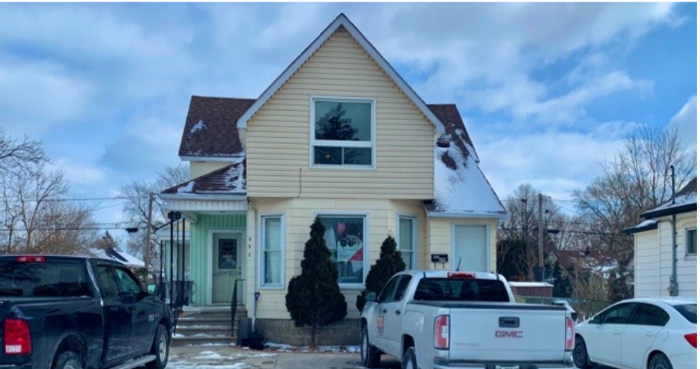
Duplex purchase price: $260K. Downpayment: $52K at 6% = $260 per month interest. Take a look at the table below below to understand how the property supports this strategy (cash flow > interest on my down payment). Eventual cash flow from turning around the units will be a lot higher (projected to be $1K+ per month so even if I never settle the down payment through a refinance I will be able to settle it just using the cash flow).
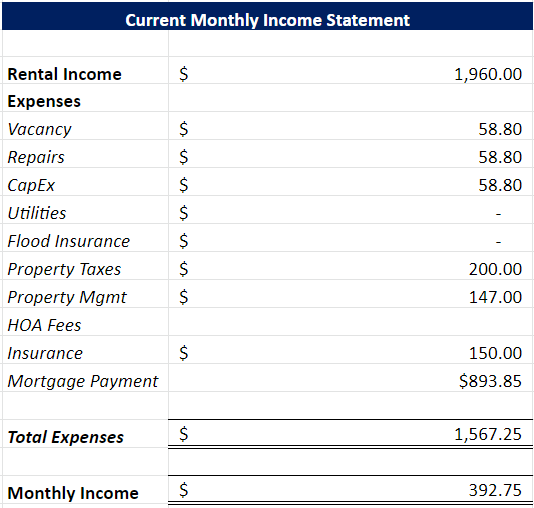
The above are the numbers of the property as we bought it with significantly under market rents. The opportunity exists to increase rental income significantly and generate $1K+ in cash flow.
As long as you can service your debt do not be afraid to leverage lines of credit to pay for a down payment.

If you are using LOC’s make sure you have an exit strategy. How will you settle the debt? Will you sell the property or refinance it with the bank or something else?

Leverage your HELOCs

HELOCs (home equity line of credits) are another great source of down payments if you already own real estate. Often we sit on equity that we have paid down through years of home ownership. This is essentially dead money since it earns you nothing and reduces your ROI. You do not want dead money. You want your money to earn you money. One way to ensure this is to tap into your HELOC’s and use this as a down payment for your next purchase. Scotiabank recently announced they would not use HELOC as a source of down payment, so you need to make sure these funds are sitting in your account (to be safe) for 90 days prior to purchasing your home.

When you are purchasing a home try to use a mortgage product that allows you to access the principal that you have paid down over the years as a line of credit. Scotiabank has this product it is called a STEP (ask your advisor about this). To my understanding BMO also has a similar product.
DO yourself a favor — make sure you have the deposit funds in your bank account
I am guilty of not having this ready myself and scrambling to make this work at the last minute. You then need to explain the flow of funds through multiple accounts which makes the underwriter all the more cautious and sketched out. You rarely benefit from having an overly cautious underwriter.
Tip — If your significant other/partner etc has the down payment funds in their bank account AND if you can be added to the bank account as a joint account holder, you can show these as your funds for down payment. This is an unofficial hack and I have no idea how long this will work for so use it at your own risk. Banks (currently) do not look at when you were added to an account. They only require that you are on title to that account and that the account has had the funds on hand for greater than 30–90 days.
Watch your Ratios
This is overlooked by so many investors.
Early on it may feel like you have more borrowing capacity than you could possibly need. You will eventually cap out on your borrowing capacity and when you do not plan it will cost you to fix those mistakes. This often includes moving debt off balance sheet, remortgaging, changing your loan products or off loading properties that hurt your ratios.
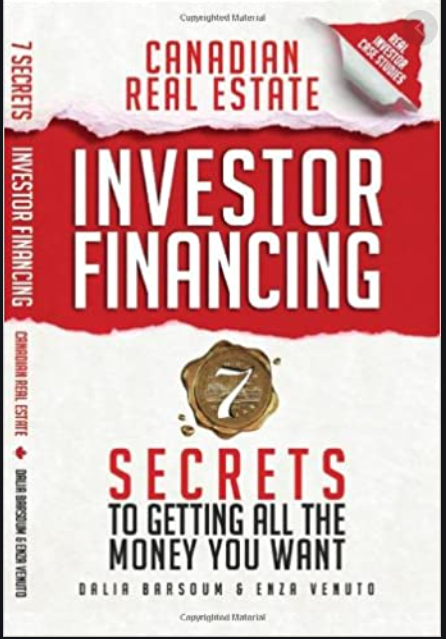
Note — speaking about ratios is likely where I am about to make the most mistakes. I personally recommend everyone read the book “Canadian Real Estate Investor Financing — 7 Secrets to getting all the money you want” by Dalia Barsoum and then speak with their own mortgage brokers!
https://www.amazon.ca/Canadian-Real-Estate-Investor-Financing/dp/0991868706
There are two main ways lenders determine your creditworthiness (i) Gross Debt Service Ratio (GDS)(ii) The Total Debt Service Ratio (TDS). Banks generally lean one way or another in terms of prioritizing these ratios, and a broker can help you figure out which one is more advantageous to you.
The GDS gauges the amount of your monthly after tax earnings that you’ll need to use to pay for any monthly costs associated with owning a house. Industry standard here is 39% (Cap). Essentially the banks want you to be able to settle all of your monthly commitments with 39% of your gross income.
The TDS ratio looks at whether you can afford a mortgage loan by considering all of the same expenses as the GDS ratio but also looks at other debt repayments including car loans, credit car payments, lines of credit and student loans. The industry generally looks for 42–44% (CAP) on this ratio.
Ultimately, stay on the side of getting cash flowing assets and keeping your non real estate liabilities low if you want to grow a portfolio.
Cars hurt
It’s tempting, I know. I am guilty lol.
We work hard to make money (employment or self employed etc) and save up all this money. It can feel like we are entitled to buy that luxury car that we have always wanted, and I am guilty of doing exactly this.
My $600 car payment is making me loose about $150K in borrowing capacity. The exact reason I am in the process of lease busting my car.
So as much as you can, defer buying a car or financing one. Buy it cash if you must, financing is the last resort. I sold my car after university and lived for 5 years without a car! Frugality is the key to success in real estate so live below your means.
Delay your primary residence
This might be quite controversial.
In my opinion it is (almost) always better to defer purchasing your primary residence. The debt of a primary residence generally negatively impacts your DSRs as a result of your primary residence having a mortgage with no offsetting additional impact on your net income. You are better off renting while you build up a real estate portfolio and deferring buying your primary residence until you have a few properties under your belt.
This has been my approach.
Delay your primary residence
You might be going huh?
Put simply, if you are buying a principal residence or an investment property, try to qualify for that property and purchase it with only one person’s income (whether you are married or doing partnerships with others).
The debt will adversely affect all persons on title. Keep your interest on the property off title if it is an investment property and only have one person on title and registered for the debt.
If multiple people are on title, the bank will view each person as being 100% liable for the debt, while only being entitled to their percentage ownership of the rent. For example you buy a $200K house with a $160K mortgage and three partners. Each partner is 100% liable for that $160K debt — meaning any new/future application will reflect them as being 100% liable for $160K. That house rents out for $2K a month, great. However, the bank will only add 33% (1/3) of the rent to the persons net income for their mortgage application. The result, each persons ratio is negatively impacted.
You can always buy a property. — private financing
And lastly, I’ll leave you with this.
You can almost always buy a property — in some way and form. This is why when I find amazing deals, I quickly put out an offer. If I were to wait and find out my financing situation every time, I would likely lose the deal. If I get it, I figure it out. If not — move on to the next one.
I periodically get a blanket ‘okay’ from mortgage brokers that as a worst case measure I have the capacity to borrow through a B lender. Your real worst case if you get this okay, is that you can borrow the funds from a private lender at 12% (as long as you have a decent deal on your hands).
With all of this being said — we are currently in very turmoil markets where lending requirements are constantly changing. Execute caution and stay educated!
  • Home
  • About
  • Portfolio
  • Blogs
  • Contact
Menu
  • Home
  • About
  • Portfolio
  • Blogs
  • Contact

Find Me Here

Book a Call

feel free to reach out to Mayu directly via e-mail or feel free to book a call directly with Mayu

Book Now

Mayu Thava All Rights Reserved © 2020

Powered by Accendo.ca